Showing posts with label supercar. Show all posts

Sunday, November 12, 2017

Lamborghini Urraco

It’s pretty easy to identify a modern Lamborghini as a Lamborghini. Bonkers styling, full of razor-edged angles, gaping vents, and an aggressive stance, set them apart from the relative restraint of McLarens and effortless beauty of Ferraris. Furthermore, while Ferrari expanded its range to include the “downmarket” California and four-seater AWD FF, Lambo has stuck to a lineup of two high-intensity supercars and the occasional one-off for the past 15 years.

While Lamborghini has been focusing on blisteringly quick supercars of late, it hasn’t always been this way. Back in the 1970s, Lamborghini produced the car you see above, the (somewhat) practical and subtle Urraco. Built to battle other entry-level 2+2 sports cars like the Ferrari Dino 308 GT4 and Maserati Merak, the Urraco featured a more spacious interior, a 180-247 hp mid-mounted V8, and more subdued styling than the Countach it was sold alongside. However, the simpler design doesn’t make the Urraco any less stunning. 

Up front, the Urraco’s long, flat hood is duplicitous, suggesting a front-engine setup when in fact the V8 is housed behind the rear seats. Pop-up headlights hide above the thin chrome bumper, and the two deep, rectangular vents in the hood give the Urraco a more weighted, muscular look. 
The windshield protrudes upwards at relatively steep angle—especially compared to the one-box Countach—and the upright cabin hints at the more usable intentions of the Urraco. Slab-sided doors and light character lines give the Lambo a glassy, tranquil appearance.

The Urraco’s defining feature is the set of “wings” that cover the C-pillar. These black panels give the Urraco a unique look to distinguish it from its competitors, while also pairing with the rear window louvres to add a dash of athleticism. 

Lamborghini’s 2+2 would only stay in production for six years, before being replaced by the two-seat Silhouette and Jalpa. While not the most ambitious design, the Urraco’s crisp, smooth wedge and quirky C-pillar make is an elegant and interesting design, and a very lucky spot.


Grade
Front: A-
Back: A-
Overall: A

Photos courtesy of James Harvey

Monday, March 6, 2017

Monday, November 7, 2016

Car Lyric of the Week: Can't Tell Me Nothing and Mercy by Kanye West


     Can't Tell Me Nothing:

     "Let up the suicide doors
     This is my life homie, you decide yours"


     Mercy:

     "Let the suicide doors up
     I threw suicides on the tour bus
     I threw suicides on the private jet
     You know what that mean, I'm fly to death"


     On the defiant, yet introspective "Can't Tell Me Nothing," Kanye calls out the haters while reflecting on the consequences of wealth and fame. However, Yeezy also makes a small blunder: he mistakes scissor doors for suicide doors. Suicide doors are hinged at the rear and open backwards, and can be found on modern Rolls-Royces. Scissor doors are what Ye actually meant to rap about, as these open vertically, and these expensive contraptions have been made famous by Lamborghini. This is an excusable mistake on West's part, but unfortunately he made the exact same error five years later. On "Mercy," a Lamborghini Murcielago-dedicated banger off his collaboration album Cruel Summer, Kanye yet again messes up. Making the mistake once is understandable, but the fact that he spits essentially the same line five years later makes me wonder if no one told him he was wrong in the first place in fear of bruising his sensitive ego.


Suicide doors on a Rolls-Royce Phantom Drophead Coupe at the 2015 New York Auto Show

Scissor doors on a Lamborghini Murcielgao at the 2015 New York Auto Show

Thursday, September 8, 2016

Artistic Photo #10

Lamborghini Egoista Concept at the Lamborghini Museum in Sant'Agata Bolognese, Italy
(Taken on August 20, 2015)

Saturday, July 2, 2016

Porsche 911 GT3RS

Park Slope, in Brooklyn, NY, is a very nice neighborhood, and I am very fortunate to have grown up there. However, it is in no way a good supercar spotting area; most parking spots are filled with beat-up first generation Subaru Foresters or fifth generation Volkswagen Passats. So when I turned the corner on my way home and found this deep purple Porsche 911 GT3 RS parked on my street I began to hyperventilate from excitement. I rushed inside and frantically grabbed my camera because this low-to-ground, mean-looking track machine is by far the coolest car to grace the crumbling streets of 16th Street.

Each new generation of the 911 is an evolution of the previous model--it retains the classic semi-circle shape but has the individual design elements, the lights and grilles, are up to modern standards. The 991, which debuted in 2012, continued this pattern, with slight changes from the 997 that preceded it. The headlights featured xenon units instead of basic halogen units, LED fog lamps, slimmer taillights, and a more intricate lower front fascia. There is a reason why Porsche does not give the 911 drastically overhauls. It is one of the most beautiful car shapes of all time, and while the periodical updates to the design are not very exciting, every generation of the 911 has retained the attractive proportions of the original.

This 911, the GT3 RS, can't be categorized as beautiful. The swooping 911 curves are still there, but the myriad of blacked-out and trim pieces and vents lend this performance-focused Porsche an aggressive aura. The wide rectangular vent flanked by square intakes pushed out as far as possible dominate the lower front fascia and make the GT3 RS look lower and wider than the other 911 models. A thin U-shaped vent at the base of the hood accentuates the performance image. The black plastic splitter sticks out from under the toned bodywork, making the 911 look powerful. The Porsche logo, however, is simply a sticker, which feels and looks cheap.

Massive 21 inch, 5-spoke, silver wheels fill the hubcaps, enhancing the low-to-the-ground, dynamic stance. Yellow brake calipers peek out from behind the spokes, suggesting intense performance. GT3 RS branding plasters the front fend, just above the black plastic sill. However, make makes the side of this 911 particularly distinguishable and particularly attractive are the two massive vents. Starting above the front wheel and extending down the front fender, a vent shaped like a sideways ladle composed of wide black slats cools the brakes while giving the 911 an athletic vibe. Just behind the door handle, the circular air intake, also found on the Turbo model, sucks in air for the flat six engine housed in the rear and gives the 911 brawny haunches.

A massive, brutally beautiful, black and purple wing soars above the rear deck, hoisted by spindling silver supports. Combined with the lip spoiler beneath it, the Porsche 911 GT3 RS has a lot of downforce and a lot of attitude. The black plastic engine cover looks a bit cheap, but still contrasts nicely with the main paint color, like the "Ultraviolet" here. Boomerang-shaped vents rise out of the black lower rear fascia, while houses two muscular exhaust pipes. Overall, the 911 GT3 RS is one of the most butch, badass cars on the road.

Grade
Front: A
Rear: A
Overall: A


Tuesday, May 24, 2016

McLaren 650S Spider

650S Spider speeding away in Soho
In 1988, Ayrton Senna and Alain Prost demolished the rest of the field in their white and red MP4/4 Formula One cars. Meanwhile, their team was making a historic decision: to expand into the road car business. The stunning McLaren F1 was unveiled a few years later, and the supercar went on to set a record for the fastest production car. Just over a decade after the F1 went out of production, McLaren returned to the sports car business, introducing the MP4-12C. I have seen a few 12C's on the street, but up until recently I had yet to see its successor, the 650S, in the wild. I had gotten a look at the sexy 650S at the New York Auto Show, under the gleaming lights of the Javits Center, but a few weeks ago I spotted the low-slung sports car on the streets of Soho. Getting to lay my eyes on the slinky 650S in natural light convinced me that the McLaren is truly a beautiful design.

650S Spider at 2015 NYIAS
The front end of the 650S echoes its big brother, the hybrid P1 which was unveiled about a year before the 650S. This means the 650S gained the boomerang headlights, which are reminiscent of the McLaren logo. The 650S also featured air vents curving downwards towards the carbon fiber front splitter, which resemble tears streaming down cheeks. These black extensions also remind me of the trim pieces that extend down on the Opel Zafira Tourer and Opel Ampera. Like on the Opels, these vents make the front end of the 650S very dynamic--it almost appears like the bottom of the vents are tethered to the splitter and the rest is being blown away as the McLaren accelerates. This gives the car a sense of movement even when it is standing absolutely still. The intakes are also excellently integrated into the headlights, curving around with the modern LED lights to form a smaller boomerang. There is one aesthetic design flaw on the front of the 650S. If you look closely, you can see that where the vents meets the headlights, it becomes solid plastic, simply giving off the image of still being a true intake. While seeing a faux vent on a $15,000 Honda Fit seems reasonable, I was surprised to see the visual trickery appear on a $260,000 supercar. From afar it is difficult to notice, but from ten feet away the cheap-looking design choice becomes obvious and looks out of place on the sports coupe. Luckily, McLaren makes up for this flaw with copious amounts of exposed carbon fiber, which highlights the lightweight, high performance nature of the 650S.

650S Spider in Soho
The wheel arches powerfully curve over the front tires, flowing into the cabin. Lean, taught character lines run down the side of the 650S. A carbon fiber sill extends backwards from the front fender, giving the McLaren an aggressive stance. Massive five-spoke wheel designs accentuate the bold, muscular look. Carbon fiber reappears on the spindly side view mirrors and the large intake just in front of the rear wheels. The intake is functional, providing cool air for the engine, but also makes the car look like a true supercar.


650S Spider at 2015 NYIAS
Out back, the 650S is practically identical to its predecessor, but this is certainly no bad thing. The taillights are composed of thin LED strips that are hidden in the vent that spans across the rear fascia. These stealthy lights are elegantly simplistic, and look menacing when lit up at night. The sporty McLaren's functional design exudes performance, from the gigantic carbon fiber rear diffuser that sweeps downwards from the vent to the bulky dual exhaust pipes flanking the McLaren logo dead center. The rear fascia is topped of with McLaren's Airbrake, the adjustable wing bridging the gap between the raised rear haunches. This convenient bit of active aero raises up to 69 degrees under hard braking to provide extra downforce. When raised, the Airbrake makes the McLaren look like it's in attack mode, and the wing adds to the sports car's dynamism. Overall, the McLaren simply looks fast, with a swept back front fascia, athletic carbon fiber elements, and vents on nearly every surface.

Grade:
Front: A
Back: A
Overall: A


Thursday, April 28, 2016

10 Worst Current Car Model Names

A little while ago, I covered my top ten favorite car model names, and now it's time to look at the worst ten of the current crop of vehicles. Note that this is only for the United States market, which excludes all of the absurd names from Japan-only cars, like the Nissan Homy Super Long. This also leaves out the European markets, but in the future I will do a top ten list that covers those vehicles. Without further ado, here are the worst ten current model names:

10. Toyota Yaris
Toyota Yaris at the 2015 NYIAS
The unusual name Yaris is derived from the singular form of "Charites," the Greek goddesses of charm and beauty. All three generations of the Yaris (sold as the Echo in the US in its first iteration) have been neither beautiful nor charming, instead being bland and forgettable. I guess Toyota thinks too highly of its designers, because the name Yaris simply doesn't fit.

9. Volkswagen Tiguan
VW Tiguan GTE Active Concept at the 2016 NYIAS
Tiguan sounds weird, but it gets even stranger once you know where the name comes from. Supposedly, Tiguan is a portmanteau of the German words for Tiger ("tiger") and iguana ("leguan"). I am not sure how tigers and iguanas are related, and what either animal has to do with a German compact crossover. This combination is odd and very contrived.

8. Buick LaCrosse
Buick LaCrosse at the 2016 NYIAS
I always assumed that the LaCrosse was named for something other than the sport, but believe it or not, it is. Why a sensible premium sedan is named for an often violent, fast-paced sport is beyond me, but what I also dislike about this name is the way GM decided to spell it out. Last I checked, lacrosse did not have a uppercase "C," so this capitalization feels totally unnecessary.

7. Mitsubishi Mirage
Mistubishi Mirage at the 2016 NYIAS
Mirage is a fun word to say since the "aaj" sound rolls off the tongue well, but the definition makes customers second-guess the hatchback's abilities. The official definition according to Merriam-Webster is "something that you hope for or want but is not possible or real." Considering that Mistubishi's fuel economy numbers have been a mirage for many Japanese customers since 2002, this is not a moniker that establishes confidence in the customer.

6. Hyundai Veloster
Hyundai Veloster at the 2014 NYIAS
According to Hyundai, Veloster is a combination of "velocity" and "roadster." The first thing that is obviously wrong with the name is that the Veloster is not a roadster, but a hatchback. The "velocity" part is also misleading--the base comes with a paltry 132 hp (adding a turbo gets the inline-4 to 201 hp), and the zero to sixty times never breach the 6.8 second mark. While the name is not in any way applicable to the hatch, my biggest issue with it is that the word simply sounds childish.

5. Maserati Ghibli
Maserati Ghibli at the 2016 NYIAS
Yes, I know the Ghibli name hearkens back to 1960's grand tourer, but still the name sounds really odd to me. The combination of i's and l's does not communicate luxury or sportiness to my ears--instead I picture a small Japanese kei car. Perhaps it is that Ghibli makes me think of the comedic dwarf character Gimli from the Lord of the Rings franchise, but this does not feel like an appropriate name for a luxury sedan.

4. Mercedes-Benz Metris
Mercedes-Benz Metris at the 2015 NYIAS
I love vans, and I welcome any new entry to the American van market, but the name Mercedes chose for their newest small van confuses me. I haven't been able to find a meaning behind it, and whenever I read or say it I think of Tetris, the famous tile-matching puzzle video game.

3. Jaguar F-Pace
Jaguar F-Pace at the 2016 NYIAS
Admit it. F-Pace does not sound smooth, despite the SUV's sleek bodywork. The name does not follow Jaguar's current naming scheme, an X followed by another letter (XE, XF, XJ). By starting the name with an F, it inherently sounds like a vulgar insult. Overall, the name is not dynamic and does not conjure up images of speed or luxury.

2. Ferrari LaFerrari
Ferrari LaFerrari at the Ferrari Museum in Modena
Oh no! A Ferrari on a "worst of" list! What a sacrilege! The LaFerrari is certainly an automotive spectacle, both for its beauty and insane performance, but the name is completely lazy. It translates as "Ferrari TheFerrari," and the repetition does not sound as sexy as the supercar looks. It is easy to overlook such a bad name when the styling is so stunning and the performance is so dazzling, but when it comes down to it, LaFerrari is a disappointing name.

1. Bentley Bentayga
Bentley Bentayga at the 2016 NYIAS
Bentley's first foray into the SUV segment also has a repetitive name. The name supposedly comes from a mix of the company's name and Taiga, the world's largest transcontinental snow forest, while also being inspired by the Roque Bentayga, a peak in the Canary Islands. The name Taiga is intriguing and exotic, and would have worked great. However, by incorporating the "Bent," the name sounds repetitive and doesn't fit with the staid, luxurious presence of Bentleys. 

Monday, February 1, 2016

1984 Ferrari Testarossa

The Testarossa is one of Ferrari's most iconic sports cars and one of Pininfarina's best designs. Large posters featuring this flashy coupe covered teenagers' bedroom walls throughout the 1980s and 1990s. The Testarossa has always been one of my favorite cars, even though I had never seen one until this summer. However, while visiting Modena, Italy I had the chance to spend many many hours drooling over the beauties at the local car museums, including the Museo Enzo Ferrari which has this gorgeous red Testarossa in its collection. (Testarossa means "red head" in Italian, and while it refers to the paint on the cylinder heads in the engine, red is certainly a fitting hue for the car.) The next few paragraphs will just be me praising the Testarossa nonstop, so I completely understand if you want to just stare at the photos instead. Anyway, here I go:


The Testarossa is remarkably aerodynamic—its drag coefficient of .36 beat the Lamborghini Countach's .42, and the Countach looks extremely slippery itself. This drag coefficient translates into a curvier variation of the wedge designs of the 1970s, with a dramatically sloped hood stretching back to a low-to-the-ground cabin. Hidden headlights add to the smooth, sexy front end. The thin, rectangular lower grille and running lights emphasizes the wide, athletic stance that makes the Testarossa stand out. The narrow vent just in front of the windshield further accentuates the car's width, and hints at the 390 hp V12 beast lurking behind the cabin that propelled it to 60 mph in 5.3 seconds.

The side view of the Testarossa is dominated by striking side strakes, which cool the engine. The length and horizontal nature of the strakes make the car appear longer and lower, and therefore much faster. They also make the Testarossa instantly recognizable. Above the strakes broad haunches emerge, making the Ferrari look as if it is on the verge of leaping forward even when it is at rest.
The rear fascia expands upon the design of the side strakes. Five thin, black, metal bars stretch from end to end, caging in the taillights and rectangular grille. This highlights the Testarossa's width and causes the Ferrari to look like it is hugging the road. Two sets of dual-exhaust pipes stresses the sports car's performance credentials. The buttresses extend from the roof, causing a smooth, sloping silhouette. The Testarossa is without a doubt one of Pinifarina's masterpieces, and one of the most beautiful Ferraris of all time.

Grade
Front: A
Back: A
Overall: A


Tuesday, June 23, 2015

Callaway C4 Corvette

     At first, it seemed unusual to find this athletic Corvette-based Callaway in a deserted lot next to a roadside fast food restaurant in Texas. But when you look at all the strangely placed vents and other abnormal design cues, the desolate lot is a natural home for this 1980's oddball.

     Up front, the Callaway hasn't been altered that drastically from the normal C4 'Vette, with the biggest change being the addition of functional vents. The intakes were added to boost performance figures, however, most of the added vents hurt the Corvette's sleek styling. The four square holes are reminiscent of nostrils, causing the face of the C4 to look snout-like. While two of the vents are smoothly integrated into the headlight shape, the vertically oriented slats on the hood appear tacked on as an afterthought. Furthermore, the square vent just behind the front wheels is not a dynamic shape, and the thin horizontal bars look like those on an air conditioner.
      While the front is a jumbled mess of air intakes, the rear fascia features a clean, simplistic design. The classic 'Vette double circle taillights have been joined to create smooth ovals, though the circular units can still be spotted within these new lamp designs. The name "Callaway" is indented in a simple but elegant font between the taillights. The biggest modification is the removal of the curved rear windshield, which gave the Corvette a slick fastback silhouette. Without the iconic glass dome, the Callaway resembles the awkward offspring of a sports car and a pickup truck.

Grade
Front: B
Back: B+
Overall: B

Sunday, February 1, 2015

Top Ten Current Car Model Names


10. Chevrolet Sonic
This bold name fits the striking front fascia of the Sonic perfectly, and the exposed head and taillights always reminded me of a subwoofer on a speaker.

 9. Bentley Flying Spur
The Flying Spur originally was a designation for the sedan variant of the Continental, but it became a separate model in 2013. While there was a British tea ship known by this name in the late 1860s, I've found no direct link between the clipper and the über-luxury sedan. Nonetheless, this is one cool, elegant, and slightly mysterious name for the Conti sedan.

8. Chevrolet Volt
Although not quite as glamorous as the Flying Spur, the "Volt" name works because of just how appropriate it is. A volt is a unit of measure relating to electricity and movement of current in an electric circuit, which fits perfectly for the plug-in hybrid electric Chevy. It sure is a lot better sounding than it competitor, the Nissan Leaf.

7. Porsche Panamera
While this name is derived from the endurance race "Carrera Panamericana," which took place four times in the 1950's in Mexico, that was not why I included it on this list. Phonetically, I think it rolls off the tongue perfectly and also looks very nice when written, most likely because of the semi-symmetrical nature of the "a-n-a-m" section.

6. Dodge Durango
This tough SUV has a very appropriate name in the "Durango." Called this for the city in Colorado, it has a particularly rural, cowboy, Wild West feel to it, and when said aloud the "a-n-g" produces a Western twang.

5. Maserati Quattroporte
Though I wasn't a fan of the fifth generation Quattroporte, I have always loved the stylish-sounding name. In Italian, "Quattroporte" simply means "four-door," describing the Maser's sedan body style. But to non-Italian speakers, it sounds exotic, and quite luxurious.

 4. Dodge/SRT Viper
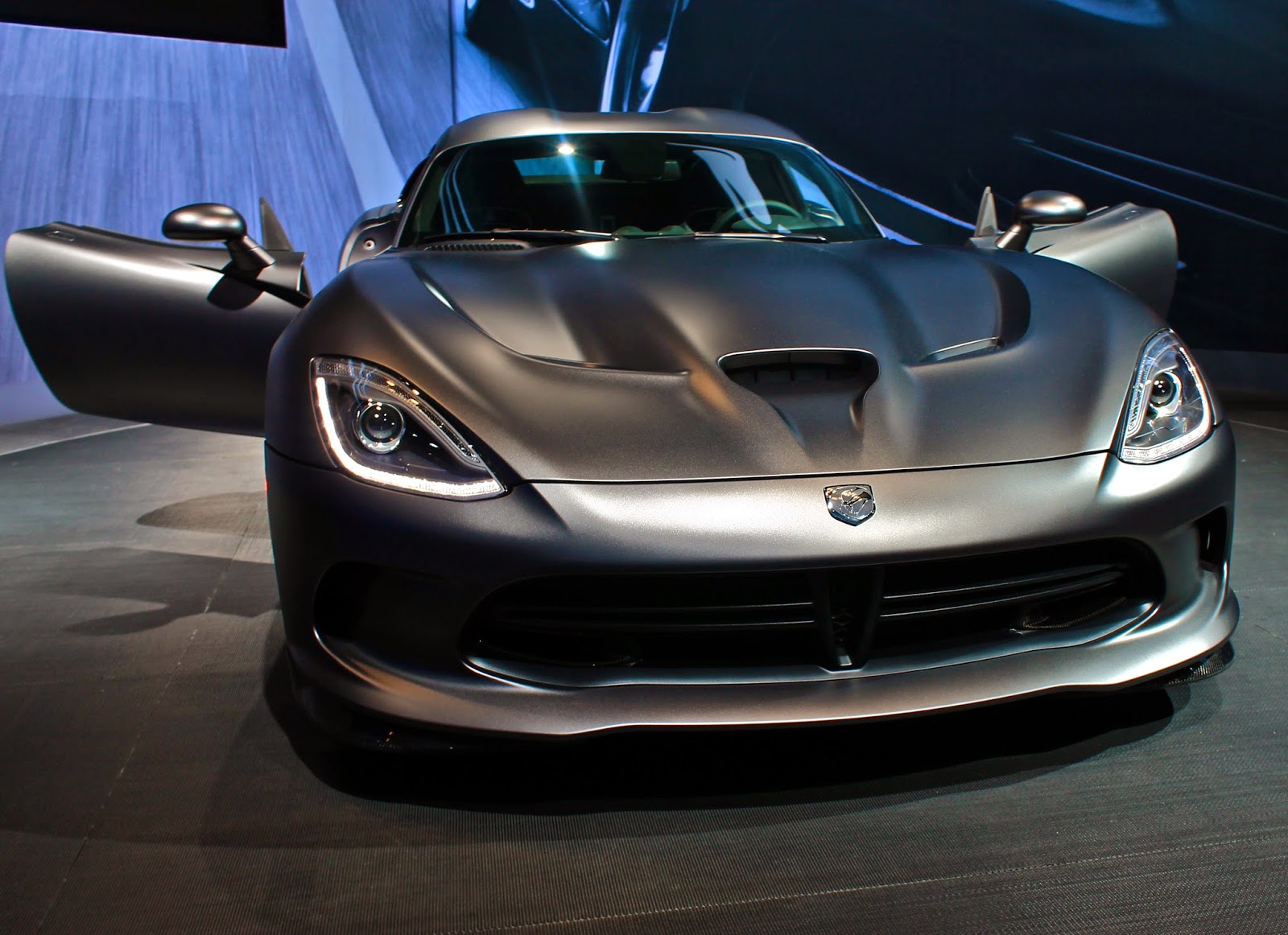
Just look at the slinky Dodge sports car, and try not to think of a vicious, venomous snake. This is one of the most aptly named cars of all time, especially considering the fifth generation's sleeker curves and even more aggressive front fascia.

3. Jeep Renegade
When the ambitiously styled Renegade Concept debuted in 2008 and was immediately designated as a design study, I was disappointed that I wouldn't ever see a Jeep Renegade production model. Lucky for me, the name revived for a funky subcompact crossover in the 2015 model year. The rebellious nature of this name fits in with the "all-American" Detroit advertising scheme which Chrysler, Dodge, Jeep and Ram have been using of late, and matches Jeep's slew of other outdoorsy, patriotic names, including the Cherokee, Commander, Wrangler, and Patriot.

2. Aston Martin Vanquish


One of the greatest recent designs from Aston was paired with paired with one of my favorite names of all time. The powerful grand tourer features many strong, backward sweeping character lines, which is accurately mirrored in the swooshing sound that is produced by the "i-s-h." Also, while the word sounds elegant, its means "to defeat thoroughly," showing the Aston's performance aspirations.

1. Ford Mustang
While the term "mustang" refers to a small, wild horse, the legendary sports car was actually named for the P-51 Mustang, a fighter plane produced by North American for WWII (Though the horse was chosen for the logo). But the key similarity between the beast and the machine is their small structure and fast, aggressive nature. This is exemplified is the car's iconic trapezoidal grille, angled headlights, and bulging rear haunches. Overall, the qualities of speed and size seen in the Mustang's inspirations make the name a perfect fit for the classic pony car.


Honorable Mention- Tesla Model S, III, X
While it is quite juvenile, I, as a 16 year-old boy, appreciate Elon Musk's current plans to eventually have a model lineup consisting of the Model S, III, and X for the not-that-subtle sexual innuendo.